Understanding Telehandlers: The Essential Equipment
Definition and Purpose of Telehandlers
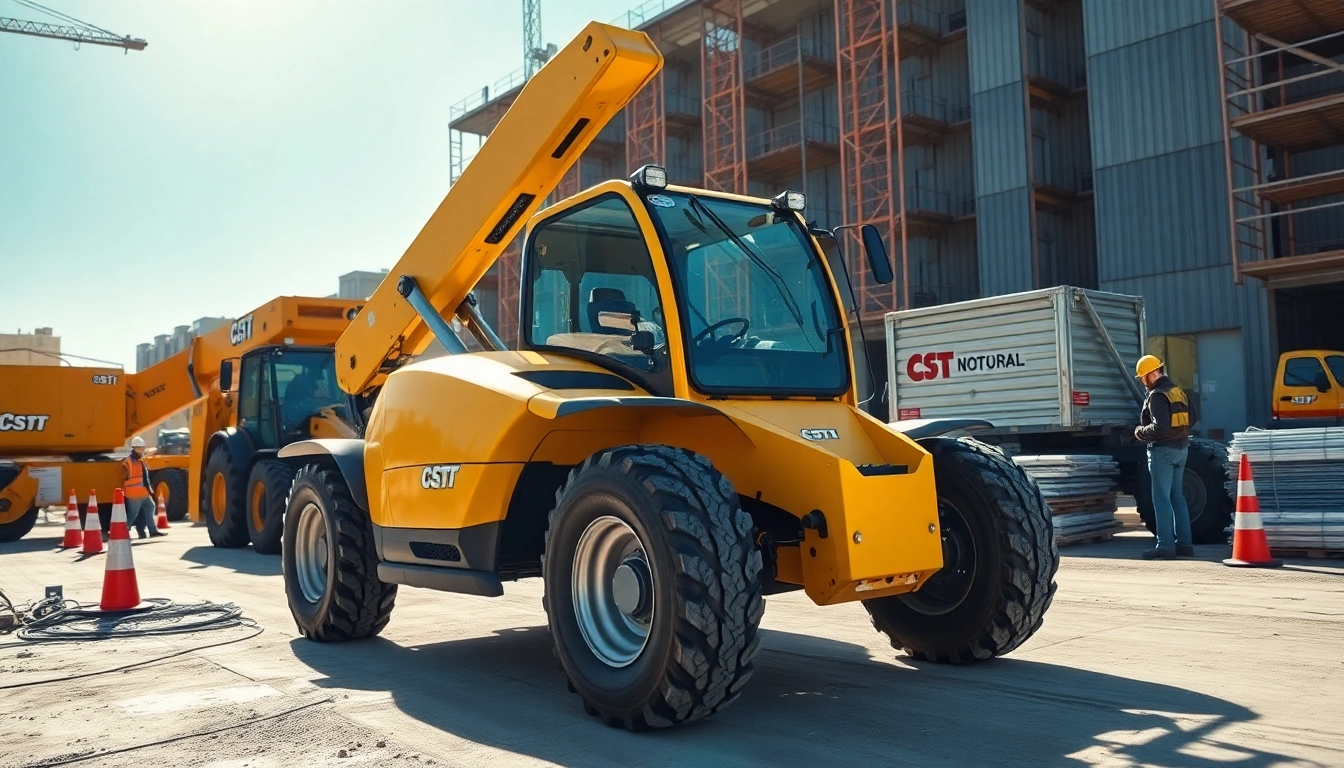
A telehandler, short for telescopic handler, is a versatile piece of machinery primarily used in construction and agricultural settings. It serves multiple purposes, effectively combining the functions of a forklift, crane, and aerial lift. By utilizing a forward-mounted boom that extends telescopically, a telehandler allows operators to lift and place loads at varying heights and distances, making it a crucial tool for handling materials on job sites.
Key Features and Specifications to Consider
Choosing the right telehandler requires an understanding of several key features and specifications. Some of the most notable include:
- Load Capacity: The capability of a telehandler to handle various weights, typically ranging from 5,000 to 12,000 pounds.
- Lift Height: The maximum height a telehandler can reach, which can be between 16 to 60 feet depending on the model.
- Reach: This refers to how far the telehandler can extend from its base, impacting its ability to access materials in hard-to-reach areas.
- Attachment Compatibility: Many telehandlers can accommodate various attachments such as forks, buckets, and winches, enhancing their versatility.
- Stability and Control: Features such as outriggers and advanced steering systems contribute to the equipment's operational safety and user-friendliness.
Common Applications in Construction and Industry
Telehandlers are invaluable in various sectors due to their adaptability. Some common applications include:
- Construction: For lifting building materials, equipment, and tools to elevated work platforms.
- Agriculture: Handling bales of hay, pallets of feed, and other farm materials.
- Mining: Moving heavy machinery and materials in rugged terrains.
- Landscaping and Municipal Work: Assisting in tasks such as planting trees and moving dirt.
Types of Telehandlers and Their Use Cases
Standard Telehandlers: Versatile Workhorses
Standard telehandlers are the most common type, ideal for general construction and agricultural tasks. They have a straightforward design that allows operators to maneuver easily in various situations. With typical load capacities and reach capabilities, these units are perfect for tasks where versatility is essential, making them reliable workhorses on many job sites.
Rotating Telehandlers: Specialized Functions
Rotating telehandlers feature a pivoting boom that can rotate 360 degrees, offering enhanced flexibility for lifting at various angles. These models excel in crowded or complex job sites where traditional telehandlers may struggle. Their ability to reach and move loads safely in tight spaces makes them ideal for construction projects requiring precise placement of materials.
Heavy-Duty Telehandlers: Robust Solutions
Heavy-duty telehandlers are designed for extreme conditions with high load capacities and robust engines. These models are well-suited for heavy lifting in industrial applications, such as construction of large facilities or heavy machinery handling. They often come with additional features for improved stability and durability under tough environments.
Factors to Consider When Selecting a Telehandler
Load Capacity and Reach Requirements
When selecting a telehandler, understanding both the load capacity and the reach is vital for ensuring the chosen model meets operational needs. The load capacity must exceed the maximum weight you plan to lift, while the reach should allow access to the needed height and distance without compromising safety.
Site Conditions and Terrain Compatibility
Consider the site conditions, as terrain plays a crucial role in telehandler operation. Models with all-terrain capabilities are necessary for rough and uneven surfaces. In contrast, compact telehandlers are ideal for urban environments where space is limited.
Fuel Type and Operational Costs
Assessing the fuel type—diesel versus gasoline—is also essential since it impacts operational costs. Diesel engines are often more efficient for heavy-duty tasks, while gasoline engines may suffice for lighter applications. Evaluating the total cost of ownership, including fuel consumption and maintenance, will help in selecting the most economical model.
Safety Considerations for Telehandlers
Operator Training and Certification
Safety training is essential for telehandler operators. Proper certification programs teach essential operational skills, safety protocols, and risk management strategies to prevent accidents on the job site. Investing in quality training ensures that operators handle telehandlers effectively and safely.
Safety Features and Best Practices
Modern telehandlers come equipped with several safety features to help mitigate risks:
- Stability Indicators: Warn operators if the machine is at risk of tipping over.
- Load Sensors: Calculate the weight and prevent overload to ensure safe lifting.
- Emergency Shut-off Controls: Allow quick engine shutdown in case of emergencies.
Best practices such as regular safety checks, pre-operation inspections, and employing a spotter during operation can further enhance safety.
Maintenance for Long-Term Reliability
Regular maintenance is crucial for the longevity and reliability of a telehandler. Basic maintenance includes checking fluid levels, inspecting brakes, and examining the hydraulic system. Implementing a routine schedule for professional inspections helps address potential issues early, ensuring that the equipment remains in top working condition.
Frequently Asked Questions About Telehandlers
What load capacity should I look for in a telehandler?
Choose a telehandler with a load capacity that exceeds your expected maximum loads to ensure safety and efficiency.
Are telehandlers suitable for all terrains?
Telehandlers can operate on various terrains; however, specific models are designed for rough or uneven ground.
How do I maintain a telehandler?
Regular maintenance includes inspections, oil changes, and ensuring safety features are functional to prolong equipment life.
Can telehandlers be used in confined spaces?
Some compact telehandler models are designed for narrow spaces, making them suitable for urban construction sites.
What is the typical lifespan of a telehandler?
A well-maintained telehandler can last 10-15 years, depending on usage and adherence to maintenance schedules.